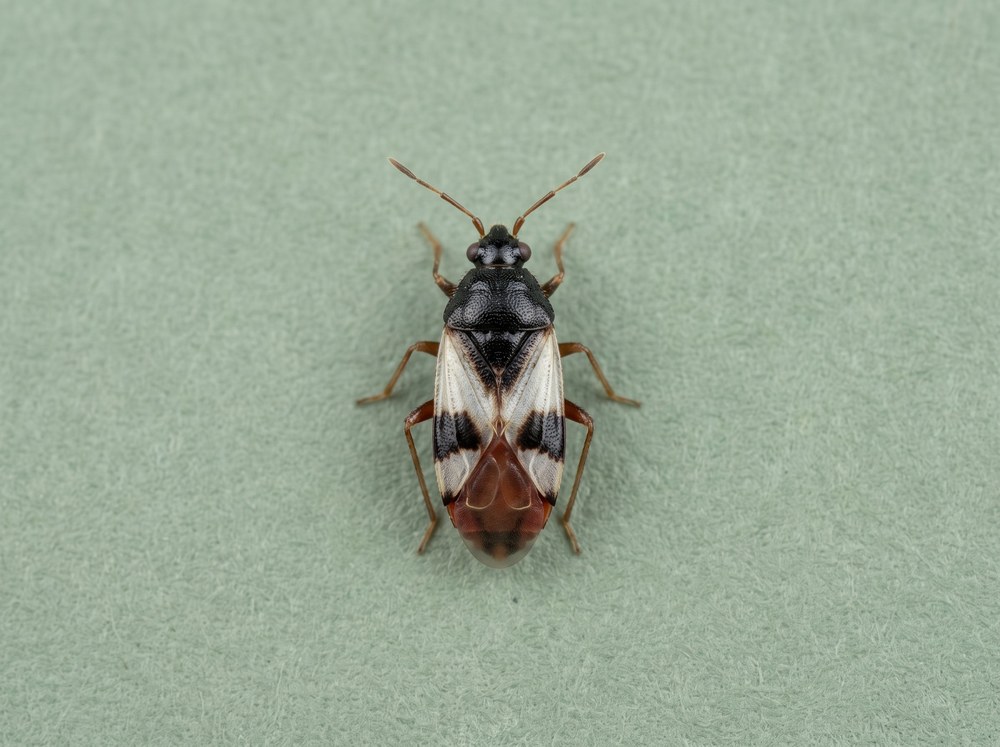
Minute Pirate Bug Bite: Symptoms, Danger & Treatment (2026)
A bite this painful shouldn't come from a bug this small — but that's exactly the complaint behind most minute pirate bug reports. The insect measures barely an eighth of an inch, yet its sharp, needle-like beak can deliver a jab sharp enough to make you yelp. The good news: it isn't dangerous, doesn't spread disease, and usually fades within a day or two.
What the minute pirate bug bite looks like
There's no waiting around with this one. The sensation is immediate — a sudden, sharp pinch that people frequently describe as far more painful than the size of the insect would suggest. Unlike a mosquito, which bites painlessly and leaves you to discover the itch later, a minute pirate bug jab registers instantly, often before you've even spotted what landed on you.
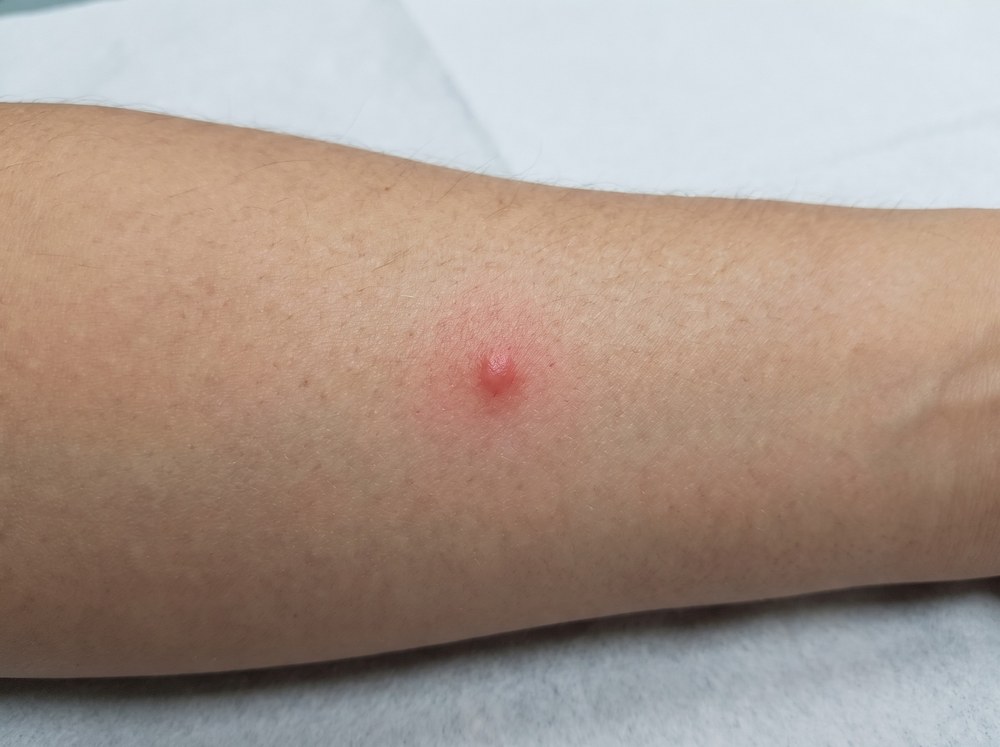
In the minutes that follow, most people see a small red bump or welt at the site, sometimes with mild surrounding redness. There's usually no puncture pattern, no blister, and no bull's-eye — just a localized reaction that looks similar to an early mosquito bite. Reactions vary considerably from person to person: some people develop visible swelling, others just a faint red mark, and a portion of people notice no lasting mark at all despite feeling the pinch clearly.
Because the bugs often show up in numbers on warm, sunny days in late summer or fall, it's common to end up with several separate marks on exposed skin — arms, neck, or ankles — rather than a single isolated bite. If you want to see how the appearance compares against other true bugs and biting insects side by side, this illustrated minute pirate bug species profile walks through the visual differences in more detail.
The most common misidentification at this stage is chiggers or mosquitoes, since both can leave a similar small red bump. The giveaway is timing: a minute pirate bug bite hurts the instant it happens, while chigger and mosquito reactions build up more slowly and tend to itch rather than sting.
Which Bug Bit Me?
Not sure it was a minute pirate bug? Answer three questions and we'll narrow the list.
If the dropdown answers still feel uncertain, you can also identify an insect from a picture using a broader photo-matching reference.
Symptom timeline
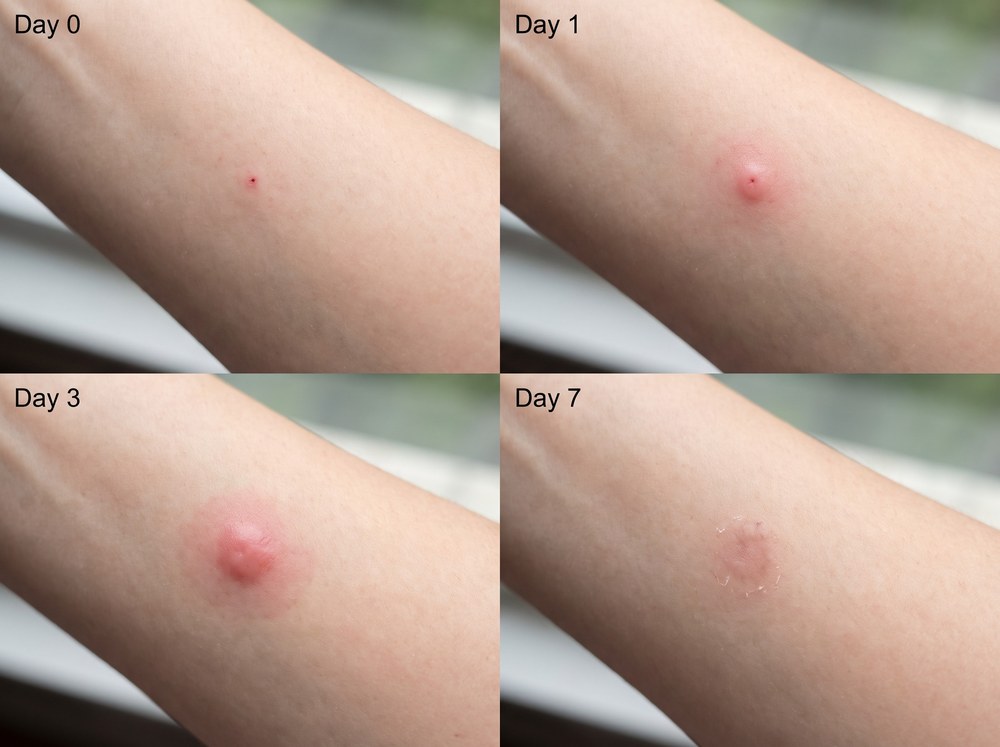
Hours 0–2. The pinch is immediate and sharp, often the first sign anything happened. A small red bump or welt may appear within minutes, sometimes with mild swelling; some people see nothing visible at all despite the pain.
Hours 2–8. Any redness or swelling that's going to appear usually peaks in this window. Itching can set in, especially if you've scratched the area. Multiple bites from the same encounter tend to look similar to one another.
Day 1–2. For most people, redness and swelling begin fading noticeably. Itching may linger a bit longer than the visible mark itself. This is the point where uncomplicated bites are clearly on the mend.
Day 3–7. Bites that are healing normally are usually gone or nearly invisible by now. If a bite is still spreading, growing more painful, or accompanied by warmth, pus, or fever at this point, it's no longer a typical minute pirate bug reaction — seek medical evaluation to rule out a skin infection or an unrelated cause.
Wondering how serious yours actually is?
Check My SymptomsIs it dangerous?
For the overwhelming majority of people, a minute pirate bug bite resolves entirely on its own within a day or two, leaving nothing behind but a memory of how surprisingly painful it was. Extension entomologists describe the bites as a minor irritation with no medium- or long-term effects — this is not a bug that transmits disease or injects venom, saliva, or (contrary to a persistent myth) acidic urine.
The signature complication people search for with any biting insect — a severe allergic reaction — has not been documented as a known risk with minute pirate bugs specifically. Reactions vary from person to person: some develop noticeable swelling or redness, others get nothing more than a fleeting sting, and a small minority may experience a stronger local reaction. What's not typical is systemic illness, fever, or breathing trouble from the bite itself; if those occur, they point toward something else, such as a secondary infection or an unrelated allergy trigger, and warrant medical attention.
Children, people with sensitive skin, and anyone prone to stronger allergic responses to insect bites in general may notice more pronounced redness or swelling, though this is still a local reaction rather than a systemic one. There's no established higher-risk group for serious complications from this specific bite.
Bottom line: monitor the bite for the first 24 to 48 hours. If redness or swelling is shrinking, you're on the expected path. If it's spreading, growing warm, producing pus, or accompanied by fever or breathing difficulty, escalate to medical care rather than waiting it out.
Bite Symptom Checker
Check every symptom you're currently experiencing. Get a plain-English risk read.
Treatment
Wash and elevate. Clean the bite site with soap and water to remove any dirt or bacteria introduced by scratching, and keep it elevated if any swelling develops.
Cool, don't heat. A cold compress or ice pack, applied for short intervals, is the go-to for reducing swelling, itching, and pain from this kind of bite. Heat has no established benefit here and can make swelling and itching worse.
OTC support. An over-the-counter pain reliever handles the sting, an oral antihistamine calms itching, and a topical like hydrocortisone cream, calamine lotion, or a baking-soda paste can settle the skin. If you'd rather double-check what actually bit you before treating, you can identify a minute pirate bug on your phone using the BugKnow app in seconds.
Watch, don't wrap. Leave the bite uncovered so you can track it. If swelling spreads noticeably beyond the original mark, or fever or breathing trouble appears, treat that as your signal to see a medical professional rather than continuing home care.
Prevention
Repellents built for mosquitoes and ticks generally don't work on minute pirate bugs, since the bugs don't appear to track skin the same way blood-feeding insects do. The most reliable prevention is simply covering exposed skin with long sleeves and pants during late-summer and early-fall outbreaks, especially when working near flowers, gardens, or fields where the bugs are active.
Because activity is tied to weather and prey availability rather than a predictable season, outbreaks can vary sharply from year to year and even day to day. Focusing outdoor tasks on cooler, cloudy days can reduce exposure, since these bugs are most active on warm, sunny afternoons. If you've spotted a large number of them around your home or garden, a closer look at nearby plants and flowering areas is warranted — that's usually where they're coming from.
Wondering whether this needs a doctor's visit?
Run the Decision TreeShould You See a Doctor?
A short decision tree based on CDC and Mayo Clinic guidance.
1 / 3 Are you having any difficulty breathing, throat tightness, or facial swelling?
2 / 3 Is the bite area spreading, warm to the touch, or producing pus?
3 / 3 Has the reaction been getting steadily worse for more than 48 hours?
Frequently asked questions
Can a minute pirate bug bite make you seriously sick?
No. Minute pirate bugs do not feed on blood, inject venom, or spread disease. The bite is a defensive or exploratory jab from their needle-like beak, and the pain is out of proportion to how small the insect is. Most people experience only brief redness, swelling, or itching. In rare cases where pain, swelling, or fever worsens, see a healthcare professional to rule out a secondary skin infection.
Why does such a tiny bug hurt so much?
The pain comes from a sharp, needle-like mouthpart called a rostrum that all true bugs use to probe surfaces, not from venom or acidic urine as an old myth claims. When a minute pirate bug mistakes skin for prey or moisture, it jabs hard enough to register as a sudden, sharp pinch even though the insect itself is barely an eighth of an inch long.
How long does a minute pirate bug bite last?
The sharp pinch itself is instant, and any redness, swelling, or itching that follows typically fades within a day or two. Some people notice no visible mark at all, while others develop a small welt similar to a mosquito bite. Reactions vary by person, and there are no documented medium- or long-term effects from a single bite.
How do I tell a minute pirate bug bite from a chigger bite?
A minute pirate bug bite is a single sudden, sharp pinch with a quick red bump, and the insect is usually gone before you finish reacting. Chigger bites appear as clusters of intensely itchy small red bumps, often around the ankles, waistband, or other areas where clothing is tight, and the itching builds over hours rather than hitting all at once.
Do minute pirate bugs bite more than once?
A single bug can jab more than once while it explores your skin, and in areas with high populations, such as fields or gardens in late summer, people sometimes end up with numerous separate bites on exposed skin in a short time. Each individual bite still behaves the same way: a sharp pinch followed by a mild, short-lived local reaction.
What's the difference between minute pirate bug nymphs and bed bugs?
Immature minute pirate bugs are small, wingless, and yellowish, which can make them easy to confuse with early-stage bed bugs or aphids. According to university extension research, immature minute pirate bugs can look similar to bed bugs at a glance, though bed bug nymphs are flatter, more reddish-brown, and found near bedding rather than flowers. Adult minute pirate bugs have visible black-and-white wing patches that bed bugs never develop.
Do repellents work against minute pirate bugs?
Not reliably. Standard insect repellents work by masking the carbon dioxide and lactic acid signals that mosquitoes and ticks track, but minute pirate bugs appear to land on people somewhat arbitrarily rather than hunting by scent. Covering exposed skin with long sleeves and pants during outbreak periods is more effective than spraying repellent.
When are minute pirate bugs most active?
Activity peaks in late summer through early fall across much of the United States, when prey insects become scarce and flowers dry up, pushing the bugs to search for new food sources. Some regions also report activity in mid-summer. They tend to be most active on warm, sunny days and less active once cooler weather sets in.
Take 30 seconds to check your bite now.
Check My Bite